

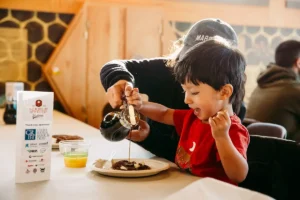
We all do it. We pour the real maple syrup onto our pancakes. Our eyes get bigger. We wonder how much we get to pour on.
The rich, delicious maple syrup we all enjoy gets its special flavor from a place that is both expected and totally unexpected. Nature.
But how does it go from tree to table? The Maple Syrup Festival is about diving into a stack of pancakes and about diving into how maple syrup is made.
After 40-plus years of making our own maple syrup, Indian Creek Nature Center has learned the secrets of nature’s sweetest gift.
Tapping Trees
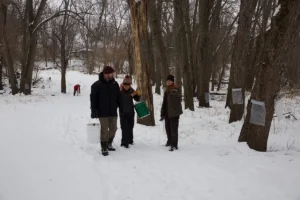
Maple syruping begins with tapping maple trees. Thankfully, between the three sugar bushes on Indian Creek Nature Center property (Věčný Woods, along Wood Duck Way, around the Barn site), there are about 100 maple trees big enough to tap.
Volunteers gathering to tap maple trees in mid-February has become an annual tradition at Indian Creek Nature Center. Carrying buckets with taps, hammers, and electric drills, volunteers march through the snow-covered woodlands to start the year’s maple syruping season.
Although Iowa weather is famously unpredictable, February usually offers the ideal conditions to tap. Maple tree sap flows best when nighttime temperatures drop below freezing and daytime temperatures rise above freezing.
There is no way of knowing how many days like this will happen each winter, but when they come, they usually arrive in late February or March. The more days like this, the more sap that can be collected.
Collecting Sap
Indian Creek Nature Center uses bags to catch the sap as it flows out of the taps. This method is highly cost-effective and leaves the beauty of the maple sugar bush unaffected, but requires manual collection. Every year, volunteers come out in February and March to help Indian Creek Nature Center staff collect hundreds of gallons of sap and bring it to the Sugar House.
Differences in climate, tree health, soil conditions, and the time of the year sap is collected can impact the sugar content. Here in Iowa, sap is typically about 2% sugar. This means it takes about 40 gallons of sap to make one gallon of maple syrup.
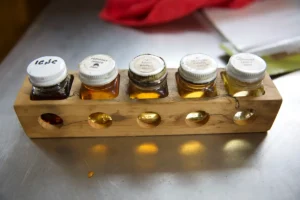
Whether the sap is collected early in the season or late in the season can also impact the color and flavor of the syrup because of a change in the types of sugars in the sap. This is because sap that is collected earlier in the season has more sucrose, but sap collected later in the season has a higher ratio of fructose and glucose.
As the sap boils, the sugars in the sap carmelize. While the stable sucrose sugars remain light in both color and flavor, the less-stable fructose and glucose sugars darken during boiling and create the intense maple flavor that past Maple Syrup Festival guests will recognize.
Making Syrup
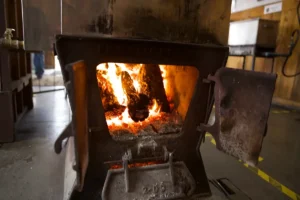
Inside the Sugar House, a sweet smell fills the air as a wood-burning stove heats the sap to a boil, sending a trail of steam up from the large evaporator in the center of the one-room building.
Long-time volunteer Mike Duss, who doesn’t mind the title of Sugar Master, has been overseeing the boiling process for years. Mike, originally inspired by a curiosity about syrup making, has volunteered countless hours in the Sugar House. He has helped to create hundreds of gallons of syrup and shared the secrets of syrup making with field trip students, families visiting during maple syruping programs, and Maple Syrup Festival guests.
“Sap is piped from a storage container outside to the larger evaporator,” Mike says, pointing at a hose leading from the wall to the evaporator, “Then we boil it to remove excess water from the sap.”
After boiling it down, the sap is moved to a smaller evaporator where it’s boiled further to remove even more water from the sap. Once it’s close to the 66% sugar density required to be labeled as Grade A syrup, it is filtered and moved to a gas-heated evaporator to get the syrup just right.